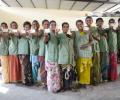
Social activist Nalini Sekhar has worked to improve the working conditions of the waste-pickers of Bengaluru for the last four years and describes the her work as being rife with "occupational hazards which energises her to work with more vigour".

'The rise of IS and intolerant Wahabism are the real dangers to Indian democracy and pluralism, not the RSS,' says Rajya Sabha MP Tarun Vijay.

This could be a major drag, not just on the empowerment of women but on the India growth story as well.

Muslims constitute 20% of UP's electorate. Currently, Muslim voters are divided between Akhilesh's SP and Mayawati's BSP. What will tilt the balance? Can Muslims back the winning party? Mohammad Sajjad explains the mysteries of UP's Muslim politics.

The chief of America's Federal Communications Commission is not a fan of net neutrality. So what's his vision of communications and digital policy in these times?

In Muthuvel Karunanidhi's passing, Tamil Nadu has lost the last of its Titans.
In her maiden Independence Day address as Chief Minister, Mehbooba made an emotional appeal to the youth indulging in violence, telling them not to be misled by the "vested interests" who want to keep Kashmir burning, and prevent the beautiful valley from turning into another Syria or Afghanistan.

'It is highly doubtful that the Trump administration will consider inserting itself into the volatile India-Pakistan dispute.'
'A change of government will bring about a lot of changes because everything is frozen for the last two years. So, the frozen energies of India will be released.' Swadeshi Jagran Manch convenor Swaminathan Gurumurthy discusses the Modi phenomenon with Shobha Warrier/Rediff.com

'They must take the bull of conservatism within their own ranks by its horns as much as they need to speak out against the fallacies of the non-Hindutva (or 'Muslim-friendly') political forces as well,' argues Mohammad Sajjad.

Unlike in the past, Modi made candid, frank and direct remarks on his hosts by suggesting that the Chinese side is holding back on further improving relations, says Srikanth Kondapalli.
'How can the BJP give Muslim candidates tickets if they don't have any good Muslim candidates?'

The Forbes 30 Under 30 list is harder to get into than Stanford or Harvard University. Meet the desis who made the cut this year.
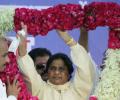
After a series of defeats since 2012, the results of the recent panchayat polls are being seen by her as a tide changer for the upcoming UP assembly elections

A former Maoist speaks to Shobha Warrier
The step forward in marketing could be a move to bypass the media and towards owning it directly, says Ajit Balakrishnan.
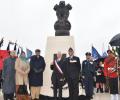
'The Indian Army served with honour and distinction in France and Flanders, East Africa, Gallipoli, Aden, Egypt, Mesopotamia, Palestine, Transcaspia, Persia and even China.' 'The sacrifice of India's soldiers was consigned to the dustbin of history in the post-colonial world.'

'J&K continues to have the highest concentration of military personnel anywhere in the world and the alienation of the Kashmiri has increased in the last ten years than ever before.'
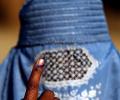
'Compared to other social groups, managing the Muslim constituency has always been easier for the secularists.' 'Just some symbolic measures and window-dressing would keep the Muslim flock together.' 'Having been betrayed by all the supposedly 'secular' political parties, Muslims should turn into citizens without any ascriptive identity marks,'says Mohammad Sajjad.
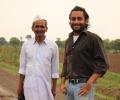
Shuvajit was confident of making a huge difference in the lives of people in rural India.

A Muslim man taking a PhD in a dance form is not unusual, but it becomes interesting when the dance happens to be Mohiniyattam, says Shobha Warrier
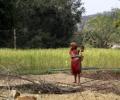
The government may claim planted trees compensate for forests lost, but that does not mean complex flora and fauna destroyed have been restored, points out Himadri Ghosh.

When Prime Minister Modi observes the first anniversary of his government at Nagla Chandrabhan, Deendayal Upadhyaya's birthplace in Mathura, on Monday, he shall be essentially reiterating his commitment to achieving the ideal of Upadhyaya's 'Dharma Rajya', a State free of inequality and of division, says Dr Anirban Ganguly.

'The BJP has latched on to the idea of nationalism, but the nationalism they advocate is not nationalism as we have understood it since the time of the freedom movement.' 'This is not secular nationalism, it is Hindu nationalism.' 'It is a form of nationalism that is exclusionary and it tends to conflate national interest with the government.' 'So, if you disagree with the government, for example, on surgical strikes or demonetisation, you are anti-national or holder of black money.'

Biometric authentication is based on the unscientific and questionable assumption that there are parts of human body that does not age, wither and decay with the passage of time.

'Breaking out of the corner into which China has painted itself would be a feat.' 'Whether Xi is able to pull it off will be known in the coming days,' says B S Raghavan, the distinguished civil servant and member of the Joint Intelligence Committee at the time of China's invasion of India.

Measures that will make Indian cities more organised and liveable need to be implemented to tackle the menace of pollution.
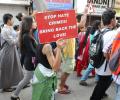
'The prime minister has merely paid lip service condemning these crimes instead of launching a massive crackdown against such brutalities,' argues Professor Mohammad Sajjad.

'Just how strong were the ties between the world's largest and oldest democracies that an incident involving a diplomat and a maid led to anger threatening the relationship itself? Or had the relationship been weakening in the past few years, masked by the empty symbolism of State dinners, asks Devesh Kapur.
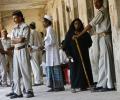
Muslims need to get out of their Isolation Syndrome, argues Mohammad Sajjad.

'This is not a Sanjay Baru or Natwar Singh type of book. It's not a memoir. It's not a book to reveal conversations, real or imaginary. This is not a book to position myself at the centre of the world.' Jairam Ramesh on his stint as environment minister.

'If you are a slave, nobody has any problem. The conflict starts when you question and ask for equal rights.'

'How many people have been skilled up and thus able to escape from needing to be in NREGA? The true success of NREGA would lie in its irrelevance -- that is, people no longer need it as a crutch.' 'NREGA should enable them to climb out of poverty and stand on their feet.' 'But this is expressly forbidden by NREGA rules. Skill development, which is what India needs more than anything else, appears to be outside the purview of NREGA,' points out Rajeev Srinivasan.

The elements are all aligned to make India a global powerhouse, says IMF Managing Director Christine Lagarde.

'If a student can't get to school, the school will get to you. Even people with low reading abilities can be taught via videos.' 'Companies and students will be linked to their universities from the beginning and not towards the end of their course.' 'Digitalisation in education will be of enormous impact. Higher education must be closely linked to the demands on the future workforce.'
'If a student can't get to school, the school will get to you. Even people with low reading abilities can be taught via videos.' 'Companies and students will be linked to their universities from the beginning and not towards the end of their course.' 'Digitalisation in education will be of enormous impact. Higher education must be closely linked to the demands on the future workforce.'

Though Muslims have been trusted allies of Jats since the days of former Prime Minister Charan Singh, experts feel the alliance has had its share of strains following his death in 1987

'Nitish is now a helpless junior ally of Hindutva.' 'He just cannot think of reining in the hoodlums raging, marauding and killing in the mohallas,' argues Mohammad Sajjad.

What is Narendra Modi like? What is his politics about? What will he do? What are his priorities? Sheela Bhatt/Rediff.com speaks to Swapan Dasgupta to find out more about the man of the moment.

'There are so many dimensions to history that we need to attend to: We need more space for local and regional histories; we need to delve into the histories of particular communities; we need to emphasise gender history and environmental history.' 'We need to think about India's history beyond India's current borders.'
 © 2026 Rediff.com - Advertise with us - Disclaimer - Privacy Policy - Sitemap - Feedback - About us - Terms of use - Grievances